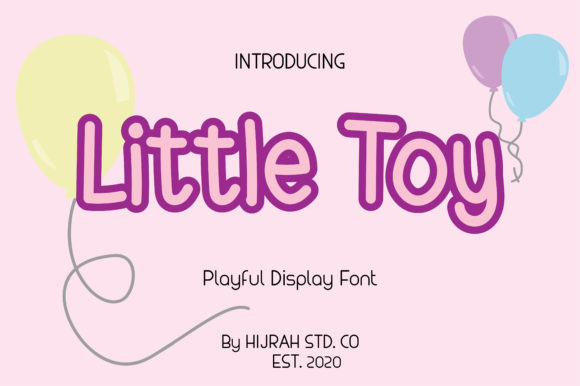
Little Toy Font for Playful Design
When it comes to creating eye-catching designs that appeal to children and their parents, the right font can make all the difference. Little Toy, a fun and playful outlined display font, brings a sense of joy and energy to any project. Whether you're designing educational materials, promotional content, or digital media, this font offers a unique way to capture attention and convey a lighthearted message.
Why Little Toy Stands Out
Little Toy is more than just a font—it's a creative tool that enhances visual storytelling. Its outlined design gives it a bold presence, while its playful curves and shapes evoke a sense of innocence and curiosity. This makes it especially effective for children-themed projects, where the goal is to engage young minds and spark imagination.
The font’s versatility allows it to work well in a variety of formats, from print to digital. When paired with bright colors, Little Toy becomes even more dynamic, making it ideal for use in party invitations, toy packaging, nursery decor, and educational resources. The contrast between the outlined letters and vibrant hues helps ensure readability while adding an artistic flair.
Who Benefits Most from Using Little Toy
Designers, educators, marketers, and small business owners will find Little Toy particularly useful. For instance, a children’s book author might use this font for headings to create a whimsical atmosphere that aligns with the story’s tone. A parent planning a birthday party could incorporate Little Toy into digital invites to make them feel more personal and exciting.
Educators working on classroom materials may also appreciate how this font can help make learning more engaging. Using Little Toy in flashcards or activity sheets can make the content more approachable and fun for young students. Similarly, entrepreneurs running a toy store or children’s boutique can leverage this font in branding elements to build a cohesive and inviting aesthetic.
Practical Applications of Little Toy
The practical benefits of using Little Toy are numerous. It simplifies the process of creating visually appealing content by offering a ready-made style that works well with minimal adjustments. This can save time and effort, allowing creators to focus more on the message and less on the formatting.
For example, when designing a poster for a children’s festival, Little Toy can serve as the headline font, instantly drawing attention with its cheerful appearance. Pairing it with a color palette of yellows, greens, and blues can enhance the overall theme without requiring complex graphic design skills.
Another scenario is the creation of social media graphics for a parenting blog. By using Little Toy in headlines or captions, the content becomes more relatable and engaging for the target audience. This not only improves user interaction but also helps in building a stronger brand identity that resonates with families.
Enhancing Communication Through Design
Effective communication often hinges on visual appeal, and Little Toy plays a crucial role in this aspect. Its playful nature helps establish a friendly and approachable tone, which is essential when targeting younger audiences or family-oriented markets. This can be particularly beneficial in marketing campaigns aimed at parents who are looking for safe, educational, and entertaining products for their children.
Additionally, using Little Toy in presentations or educational tools can aid in better information retention. Studies suggest that visuals and playful elements can improve memory recall, making this font a valuable asset for teachers and content creators alike.
Considerations and Limitations
While Little Toy excels in children-themed designs, it may not be suitable for all contexts. Its playful style might not align with more formal or professional settings, such as corporate reports or academic papers. In these cases, opting for a more traditional or minimalist font would be more appropriate.
It’s also important to consider the legibility of the font in different sizes and mediums. While the outlined design adds visual interest, it can sometimes affect readability if used in very small text sizes. To avoid this, it’s recommended to use Little Toy primarily for headings, titles, or short phrases rather than long blocks of text.
Getting Started with Little Toy
If you're interested in incorporating Little Toy into your design projects, there are several ways to do so. Many font websites offer free or paid versions of this font, depending on your needs. Once downloaded, you can easily integrate it into graphic design software like Adobe Illustrator, Canva, or Photoshop.
To maximize the impact of Little Toy, experiment with different color combinations and layouts. Try pairing it with simple geometric shapes or illustrations to create a cohesive look. Also, don’t forget to test how it appears on various devices and screen sizes to ensure consistency across platforms.
Whether you're a seasoned designer or just starting out, Little Toy provides a versatile and enjoyable option for enhancing your creative projects. Its ability to blend playfulness with functionality makes it a valuable addition to any designer’s toolkit, especially when working with children-related themes.